

What an Electronic Patient Reported Outcomes?
Electronic Patient-Reported Outcomes (ePRO) refer to digitally recorded reports that reflect a patient's perspective on their health, symptoms, treatment experiences, and quality of life and are not interpreted by healthcare providers or research staff. ePRO systems can either fully replace or be used alongside traditional paper-based patient-reported outcomes and involve the use of electronic gadgets like mobile phones, tablets, or internet-based platforms, mostly under a BYOD (bring your own device) arrangement.
Unlike conventional paper diaries, ePRO systems enable structured, time-stamped data collection and reduce recall bias by allowing patients to report information in real time or at predefined intervals. This makes them particularly valuable in ePRO clinical trials, where accuracy, completeness, and consistency of subjective health data are critical.
In clinical research and healthcare settings, ePRO focuses on capturing subjective measures of health—such as pain intensity, fatigue, mood, or treatment tolerability—that cannot be reliably assessed through objective measures alone. By digitizing patient input, ePRO solutions support the optimization of current practices, improve data quality, and enhance patient engagement throughout the study lifecycle.
ePROs are often integrated within a larger eCOA system and can consist of e-diary and digital questionnaire tools for the patients. By being focused on the patients, their design assists the adaptation of clinical trials to actual human behaviors, which makes the participation more feasible and, at the same time, produces better data for researchers and sponsors.
In this article, we will cover:
How ePRO differs from paper-based reporting in clinical trials.
The key benefits of using ePRO for data quality and patient engagement.
Common challenges and risks when implementing ePRO solutions.
Emerging technologies and future trends in electronic patient-reported outcomes.
Strategies to optimize ePRO for diverse patient populations.
Key stakeholders, use cases, and real-world applications.
How to measure ROI and business impact of ePRO.
Practical steps to get started with ePRO implementation.
Benefits of ePRO in Clinical Trials
Electronic Patient Reported Outcomes (ePRO) are at the heart of changes in clinical research of this time, as they significantly enhance the processes of collecting, managing, and interpreting data directly from patients. In effect, patient experiences are recorded electronically – most of the time through smartphones or online platforms – thus ePRO eliminates numerous shortcomings of conventional paper methods (for instance, entries that are missing, ed, or illegible), and therefore attracts a more robust evidence base for regulators, sponsors, and clinicians.
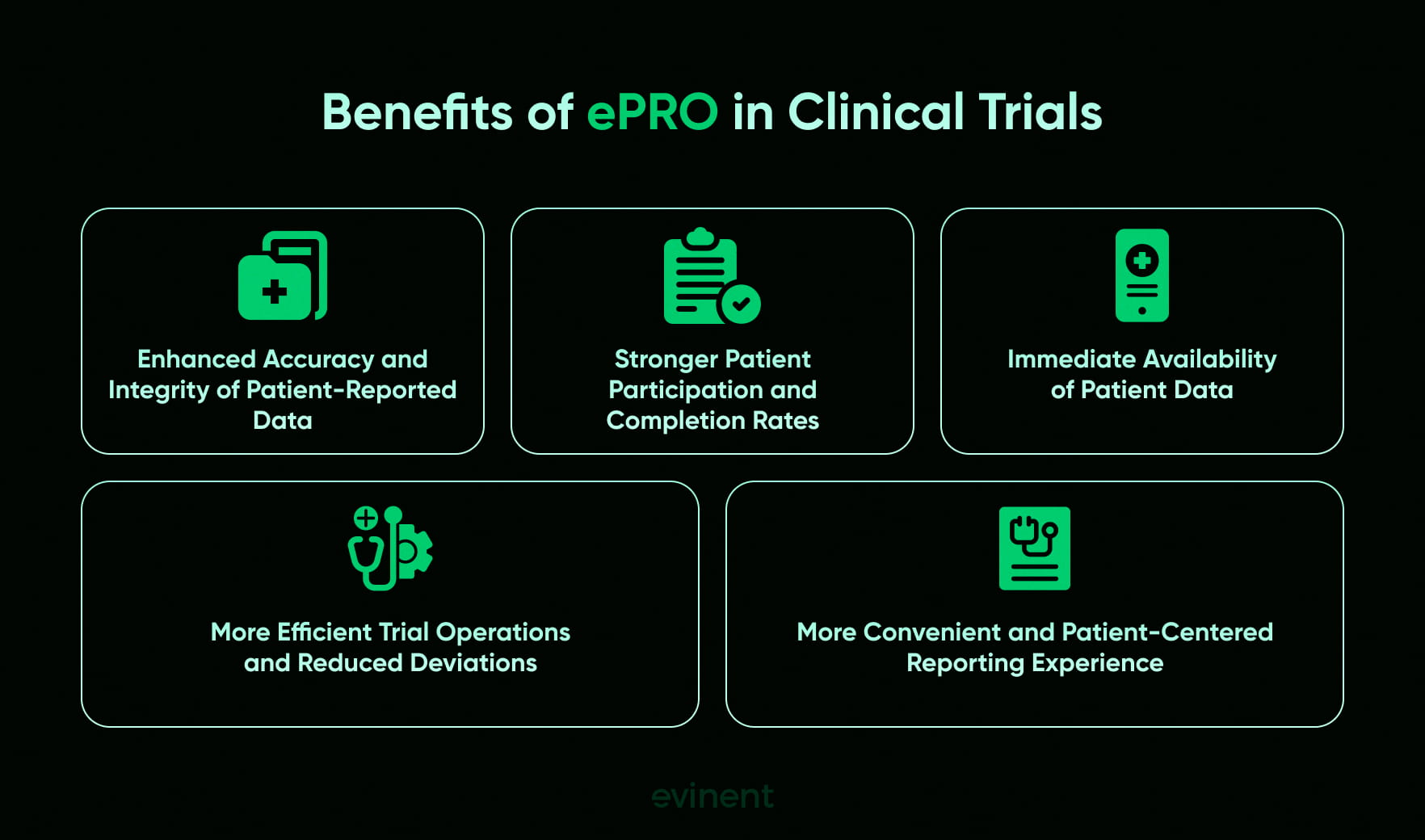
Improved Data Quality and Accuracy
ePRO systems are designed to time-stamp and validate entries automatically thereby limiting missing, inconsistent, or backfilled data that are usually associated with paper diaries. Electronic validation rules make sure that the entries are within the acceptable ranges and also lead patients to the suitable assessments, thus producing datasets that are cleaner, more reliable, and can be analyzed directly.
Higher Patient Compliance and Engagement
ePRO systems are consistently associated with higher patient compliance rates compared to paper diaries. Automated notifications and reminders patients to complete assessments on schedule, while intuitive mobile interfaces reduce burden and confusion. Clinical evaluation in prostate cancer care found completion rates of 87% for scheduled ePRO assessments, indicating that patients are willing and able to engage with electronic reporting tools. Higher compliance directly translates into more complete datasets and fewer protocol deviations related to missing patient-reported data.
Real-Time Data Capture and Monitoring
ePRO is a system that allows data to be collected and shared instantly and thus, study teams are not required to wait for paper form reconciliation or site visits as they can monitor patient safety, symptom progression, and compliance continuously. The availability of data in real-time facilitates quick identification of trends and possible signals that necessitate clinical intervention.
Operational Efficiency and Protocol Compliance
Electronic collection minimizes manual work associated with paper diaries, such as transcription, query management, and ed data entry. This reduces operational burden on study sites and sponsors, accelerates timelines, and improves adherence to protocol-defined assessment windows. Standardized ePRO tools also support consistent data collection across multiple sites and study phases.
Enhanced Patient Experience
Patient-centric features such as automated reminders, user-friendly interfaces, and the ability to complete assessments remotely (e.g., BYOD) increase convenience. This convenience can improve engagement, reduce the need for on-site visits, and lessen participant burden — all of which contribute to a better study experience and potentially improved retention over long study timelines.
Brief summary of the section:
Better patient retention (88%). ISPOR.org
Provides more accurate, timely, and complete data than paper journals. remdavis.com
Provides a more convenient experience for participants, which has a positive effect on engagement. ISPOR.org
Essentially, ePRO makes clinical trials more effective by means of better data quality, higher patient compliance, real-time monitoring capabilities, and a reduction in operational inefficiencies—all of these coming along with an improvement in the participant experience. Such advantages of ePRO place it as one of the core factors of modern, patient-centric clinical research, far from being just a digital substitute for paper diaries.
Implementation Challenges of ePRO
The use of electronic patient-reported outcomes (ePRO) in clinical trials is very beneficial to a program; however, the first implementation of the ePRO is challenging, and several challenges arise afterward that need to be solved to secure accurate, compliant, and patient-centered data collection. These difficulties extend over technical, regulatory, operational, and patient-focused areas.
System Validation and Software Reliability
ePRO platforms must be rigorously validated to comply with industry standards and regulatory requirements. Any technical malfunction, downtime, or software error can compromise the reliability of patient-reported outcomes. This includes validating electronic patient-reported outcomes solutions for accuracy, consistency, and equivalence to traditional paper-based methods, such as PROMIS instruments.
Regulatory Compliance
Complying with regulatory standards is crucial in the case of a successful ePRO implementation. The systems need to be in line with the FDA PRO guidance and the regulations for international electronic records. Not recording the validation of the procedures, security of the data, and audit trails may result in the rejection of the approvals of the studies and regulatory acceptance.
Data Security and Privacy
Patient-reported outcomes involve the most sensitive aspects of a patient's health. Therefore, the protection of such data in ePRO systems should be in full compliance with privacy regulations, it should be encrypted securely, and there should be strict access control. No doubt, CROs and study teams are obliged to put in place security measures that will ward off the threats of unauthorized access and at the same time ensure confidentiality.
User Adoption and Patient Engagement
Without a doubt, the readiness and capability of patients to make use of ePRO platforms is an immensely significant aspects. Various populations, for instance, individuals with immune-mediated inflammatory diseases or those who are not very familiar with technology, might need extra training sessions and support. It is of utmost importance for ePRO platforms to have simple and user-friendly interfaces as well as automated reminders in order to keep the patients' compliance at a certain level, to very precisely record treatment tolerability and to guarantee trustworthy reporting.
Operational and Workflow Challenges
Rolling out ePRO at different research sites means incurring the training of clinical staff, aligning the data collection protocols, and integrating with the virtual study teams. When there is a mismatch between operational workflows and ePRO systems, it may result in s, missed assessments, or protocol deviations. Thorough planning and educating the staff are required to lessen these risks.
While the implementation of ePRO in clinical trials is complex, careful planning and attention to technical, regulatory, operational, and patient-centered factors can overcome these challenges. CROs, pharmaceutical companies, and clinical teams must coordinate efforts to ensure system interoperability, validation, regulatory compliance, secure data handling, and high patient engagement. Successfully addressing these challenges allows ePRO to deliver its full potential: higher-quality data, real-time monitoring, improved protocol adherence, and a patient-centric clinical trial epro experience.

Emerging Technologies and Future Directions for ePRO
ePRO has been changing from mere digital questionnaires to something more. With the continuous progress in data collection technologies, analytics, and patient-centered designs, the landscape of both clinical trials and healthcare delivery is getting reshaped. All these innovations are intended to make ePRO simpler, more detailed, more adaptive to patients’ behavior, and more compatible with the overall health data ecosystems. The following are the main trends and developments supported by literature and expert panel.
Growing Adoption of ePRO and Digital Clinical Assessments
Industry surveys indicate that ePRO/eCOA adoption is rising sharply: recent data suggest that 73% of clinical trials already use electronic solutions for patient-reported outcomes, with projections estimating this figure will reach 86% by 2025. This demonstrates a widespread shift from paper-based to digital collection methods across therapeutic areas and ePRO clinical trial types. (Medidata Solutions, 2023)
This trend mirrors the industry's requirement for real-time data, enhanced protocol compliance, and closer integration with decentralized and virtual clinical trial models. It highlights the broadening of ePRO use from merely a tool for traditional endpoints to a channel for continuous patient engagement across the entire study lifecycle.
AI-Enabled ePRO Analytics and Decision Support
Artificial intelligence (AI) and advanced analytics are becoming central to the next generation of ePRO solutions. According to recent market research, leading ePRO platforms are integrating AI-driven reporting technologies that automatically analyze, interpret, and visualize complex patient-reported datasets. This reduces manual data queries, accelerates insight generation, and helps clinical teams make faster, more informed decisions. (Whatech, 2025)
AI might be deployed, for instance, in predictive analytics for recognizing patterns in patient engagement and identifying possible risks of dropout, thus enabling timely interventions that not only increase trial retention but also enhance data integrity. The resulting features are quite capable of making a considerable reduction in trial durations as well as the cost of operations.
Persistent Use and Long-Term Deployment
Recent long-term studies and systematic reviews suggest that ePRO systems are not only useful in individual trials but are increasingly sustained in clinical practice over time. A systematic scoping review found that approximately 64% of ePRO applications continued long-term use, particularly for monitoring symptoms, providing feedback to patients, and supporting the generation of real-world evidence in routine care settings. (Jmir, 2025)
What is more, this change to general clinical practice emphasizes a future scenario in which electronic patient-reported outcome (ePRO) systems become the link between clinical trials and the implementation of standard care, thus improving treatment assessment as well as patient involvement beyond the clinical setting.
The future of ePRO is dynamic and will continue to evolve along with the advancements in technology. It will become more integrated with clinical ecosystems and also incorporate intelligent data analysis. Some of the main trends are an increased use epro in clinical trials, AI-driven analytics, combining different modes of digital health tools, and deployment in clinical practice in a sustainable way. The patient-reported data will be improved in quality and will also become more useful as a result of these changes, which will in turn lead to a stronger evidence base for medical interventions and a better patient experience all along the therapy journey.
5 Optimization Strategies for Electronic Patient Reported Outcomes
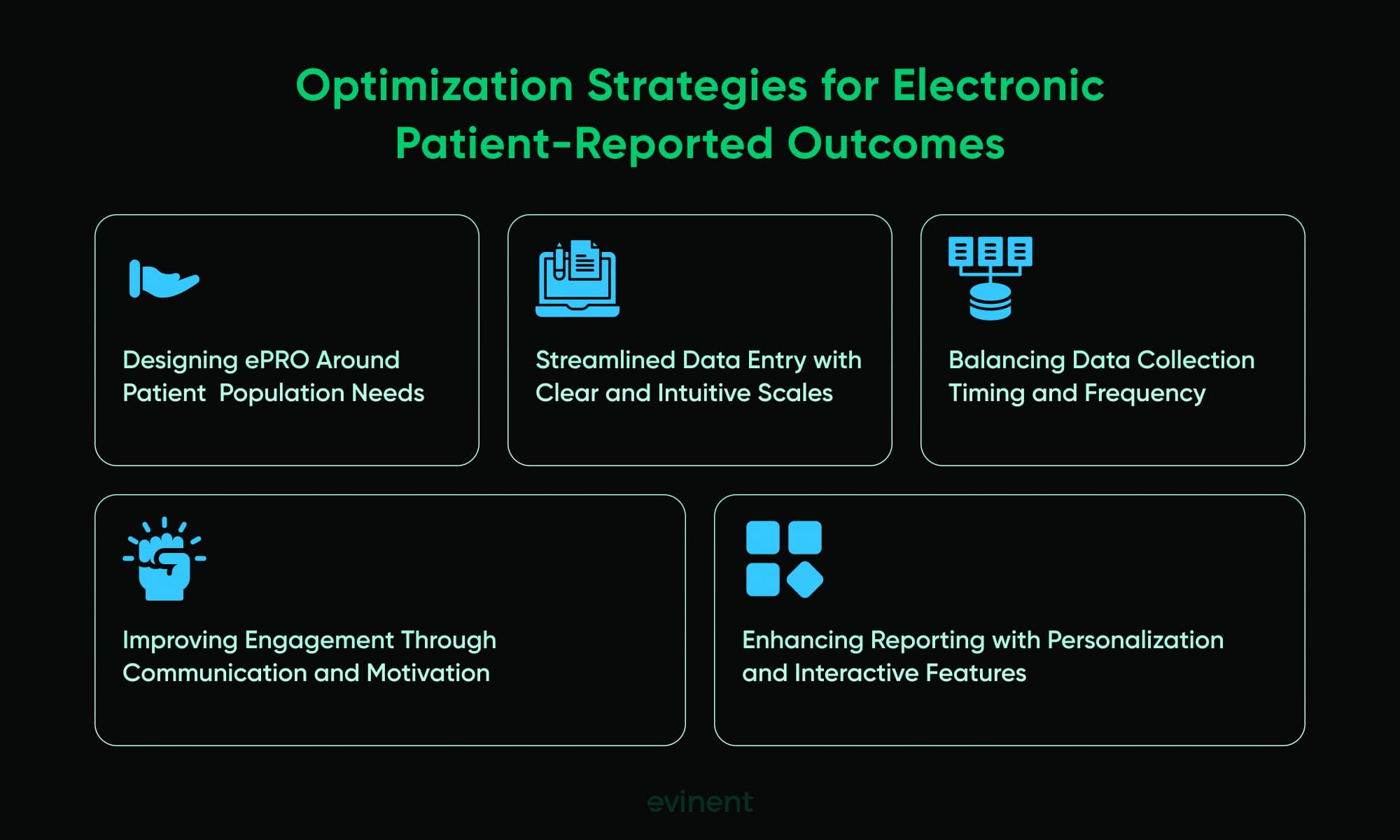
1. Aligning ePRO Design with Patient Population Characteristics
Optimization starts with a deep understanding of the target patient population. The age of the patient, the severity of the disease, the patient's cognitive load, cultural background, and how comfortable the patient is with technology are the factors that determine a patient's digital tool interaction. Many times, the interfaces that do not consider these factors lead to partial or inconsistent data capture.
It is very important that the ePRO systems' designs take into account the differences between the demographics and the patients' understanding levels so that the accuracy of responses improves and the patients get less frustrated. One of the things involved is adjusting the language complexity, the visual layout, the navigation flow, and the interaction patterns so that the system really helps the patient population's needs and limitations.
2. Simplifying Data Capture Through User-Friendly Scales and Inputs
The selection of scales and input ways is essential to the optimization process. Complicated or badly constructed scales can increase cognitive load and lead to a lower quality of data. Scales that are easy to use, visually clear, intuitive, and clinically relevant help patients to report outcomes more accurately and consistently.
Data capture that is optimized puts clarity before data richness. By limiting unnecessary response options and making sure that the same type of scale is used at different timepoints, it is easier to compare data over time and at the same time, the reporting experience becomes simpler for patients.
3. Optimizing Data Collection Frequency and Timing
Effective optimization requires careful calibration of when and how often patients are asked to report outcomes. Excessive data collection leads to fatigue and declining engagement, while insufficient frequency risks missing meaningful changes in symptoms or quality of life.
When the data gathering is in line with the clinical limits, treatment cycles, and patient's daily routines, it enables more reliable reports. It is only right that live data capturing has to be limited and filtering it to those unlocked clinically significant moments, and not going on with constant monitoring that adds very little extra or no value at all.
4. Strengthening Communication Channels and Patient Motivation
Sustained engagement depends on clear, supportive communication channels. Optimized ePRO systems use reminders, notifications, and feedback mechanisms that encourage completion without overwhelming patients. These communication strategies must respect patient motivation levels and avoid creating a sense of surveillance or burden.
When patients understand why their input matters and how it contributes to the study, adherence improves. Transparent messaging and consistent support mechanisms help maintain engagement throughout longer studies or complex protocols.
5. Applying Personalization and Interactive Functions
Advanced optimization incorporates interactive functions and personalization to adapt the ePRO experience to individual users. Conditional logic, adaptive questionnaires, and personalized s reduce irrelevant questions and focus attention on outcomes that matter most to each patient.
Addressing personalization needs allows ePRO systems to accommodate variability within patient populations while preserving standardized data collection. This balance improves both patient experience and the clinical relevance of collected outcomes.
ePRO patient reported outcomes optimization should be thorough and consider several aspects, including patient demographics, usability, data collection strategy, communication, and personalization. ePRO systems that take into account human behavior and real-world constraints of the clinic can help organizations to improve data quality, promote patient motivation, and make sure that patient-reported outcomes are trustworthy and significant throughout clinical trials.
ePRO Stakeholders and Practical Use Cases Across Clinical Research
Electronic Patient-Reported Outcomes are used by multiple stakeholders across the clinical research ecosystem, each with distinct goals, responsibilities, and success criteria. Understanding who uses ePRO, why they use it, and how value is created at each level is critical for designing solutions that are both operationally effective and clinically meaningful.
Below is a structured overview showing who uses ePRO systems, for what purposes, and how those use cases differ across stakeholders.
Stakeholder–Use Case Matrix for ePRO
Stakeholder | Primary Goals | How ePRO Is Used | Value Delivered |
Patients | Report symptoms, quality of life, and treatment experience | Complete digital questionnaires via an ePRO data capture system; provide ongoing feedback on symptoms and treatment tolerability | Reduced reporting burden, clearer communication, ability to report outcomes in real time, and in context |
Pharmaceutical Companies | Support endpoint measurement, demonstrate treatment benefit, meet regulatory expectations | Use validated ePRO instruments to collect standardized patient-reported outcome measures across trials | Higher-quality efficacy and safety data, stronger evidence for labeling and submissions |
CROs | Execute trials efficiently and compliantly | Deploy and manage ePRO systems, monitor data completeness, support sites and patients | Improved protocol compliance, reduced manual data reconciliation, and operational scalability |
Clinical Sites / Investigators | Monitor patient status and treatment impact | Review ePRO data to assess symptom trends, adverse events, and treatment tolerability | Earlier insight into patient condition, better-informed clinical decisions |
Healthcare Providers | Integrate patient perspective into care | Use ePRO outside trials to track symptoms and quality of life over time | More patient-centered care and improved clinical communication |
Regulatory and HTA Bodies | Assess patient benefit and real-world impact | Review patient-reported outcome data derived from validated ePRO instruments | Greater confidence in patient-centered evidence and outcome relevance |
ePRO systems are where patients, sponsors, CROs, and healthcare providers meet. Each party gets different benefits, but they all rely on dependable, patient-focused data gathering. If ePRO solutions are created keeping these different scenarios in view, the patient-reported outcomes will not only be scientifically sound, but they will also be operationally efficient and clinically relevant across both, the research and care continuum.
Implementation Roadmap: Getting Started with ePRO
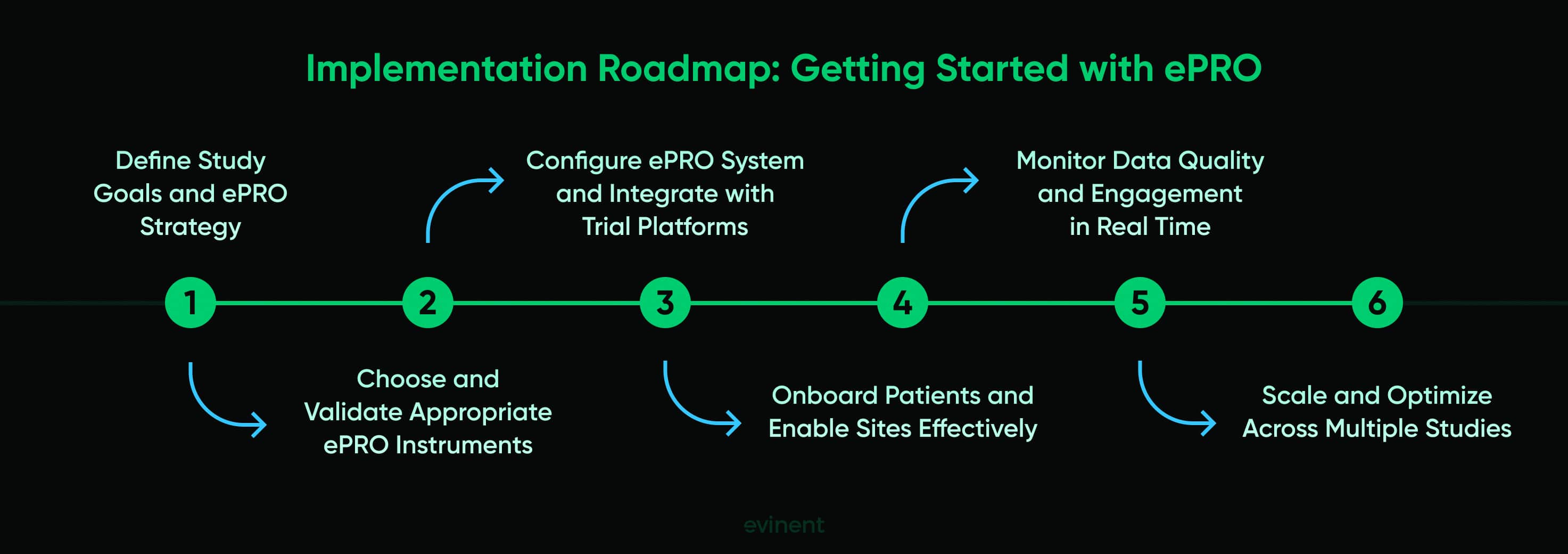
Step 1. Define Study Objectives and ePRO Strategy
The implementation process starts with clarifying how ePRO supports the overall study design. This includes identifying which endpoints require patient-reported data, how frequently outcomes should be captured, and how ePRO aligns with primary or secondary objectives. Early strategic decisions ensure that ePRO implementation serves scientific goals rather than becoming an isolated technical add-on.
At this stage, teams also determine whether ePRO will be used in traditional, hybrid, or decentralized trials, as this choice directly influences system requirements, patient onboarding approaches, and data monitoring strategies.
Step 2. Select and Validate ePRO Instruments
Choosing the right patient-reported outcome instruments is critical. Instruments must be appropriate for the target indication, patient population, and regulatory expectations. When transitioning from paper to electronic formats, instrument validation is required to demonstrate equivalence and preserve measurement integrity. This step includes ing licensing requirements, language availability, and cultural adaptability, all of which can affect timelines and compliance if addressed too late in the process.
Step 3. Configure the ePRO System and Integrate with Trial Infrastructure
Once instruments are finalized, the ePRO system is configured to reflect the study protocol. This involves setting up visit schedules, questionnaires, reminders, and conditional logic while ensuring compliance with regulatory and data privacy standards. Integration with EDC systems is a key milestone. Seamless data exchange between ePRO and core clinical platforms supports real-time monitoring, reduces manual reconciliation, and maintains a single source of truth across the trial ecosystem.
Step 4. Patient Onboarding and Site Enablement
Effective patient onboarding is critical for an initial uptake of the treatment and engagement in the long run. The provision of easy-to-follow instructions, training materials, and support channels facilitates the patient's understanding of the rationale and the method of reporting outcomes. Similarly, sites and investigators need to be equipped with the knowledge and tools to interpret ePRO data and respond to patient-reported signals.
An efficient onboarding process helps to decrease the rate of early drop-offs, increase compliance, and establish the norm for periodic reporting during the whole of the study.
Step 5. Monitor Data Quality and Patient Engagement in Real Time
After the go-live, continuous oversight is one of the key factors to the success of the ePRO implementation. The availability of real-time monitoring makes it possible for the study teams to follow up on completion rates, to recognize missing data, and to solve patient engagement issues that are likely to influence study outcomes. This measure facilitates proactive outreach, thus granting the teams an opportunity to change reminders, offer extra patient assistance, or adjust workflows in accordance with the observed behaviors and clinical constraints.
Step 6. Scale and Optimize Across Studies
Once ePRO is effectively implemented, an organization may extend its usage over various studies and drug areas. The knowledge gained through initial implementations facilitates ongoing process improvements, system configuration templates, and standardized patient onboarding practices.
Expanding the use of ePRO becomes a conversion of a single-study solution into a strategic capability that enables efficient clinical development, decentralized trials, and uniform patient-reported data collection throughout the portfolio.
An organized step-by-step plan for implementation is essential for companies to be able to put in place, launch, and increase the number of ePRO solutions by using their own resources. Through such a plan, the integration of ePRO implementation with study design, instrument validation, system configuration, and real-time monitoring becomes possible, enabling sponsors and CROs to get the maximum from data quality, improve patient engagement, and ensure that patient-reported outcomes become a seamless part of clinical trial workflows in the future.
Metrics, ROI, and Business Impact of ePRO
Knowing the quantifiable results and business value of electronic Patient-Reported Outcomes (ePRO) is very important for sponsors, CROs, and clinical operations teams weighing up the options for investment. Apart from the qualitative advantages (enhanced patient engagement, increased protocol compliance), ePRO utilization can be measured in terms of data completeness, operational efficiency, cost, and even clinical outcomes when pitted against conventional paper-based reporting systems.
Quantifying Data Quality and Missing Data Reduction
One of the most widely cited benefits of ePRO is the reduction in missing or unreliable data compared with paper methods. ePRO platforms leverage real-time electronic data capture and validation rules that eliminate manual transcription errors and prevent back-filling, a significant source of missing information in paper diaries. Real-time validation also creates reliable audit trails, improving data integrity and regulatory compliance. (mapi-trust)
Impacts on Protocol Deviations and Operational Efficiency
Enhanced data completeness is directly linked with a reduction in protocol deviations, monitoring queries, and more robust datasets at the analysis stage. With the help of ePRO instruments, which feature automatic checks and time-stamped entries, trials can reduce the time spent on missing entries or inconsistent responses. These operational savings may lead to an accelerated data cleaning cycle and minimized data submissions, which are generally the cause of study s. (remdavis, 2025)
Effect on Study Timelines
ePRO noticeably affects the duration of clinical trials by lessening the problem of data reconciliation and providing the opportunity for site and patient engagement daily. The availability of data at the time of the study is crucial for the study teams to quickly act on incomplete entries or safety signals, resulting in a decrease in the time from data collection to data lock. Faster data readiness leads to the shortening of times for interim analyses, regulatory submissions, or end-of-study reporting.
Formal industry-wide metrics on time savings are not always publicly available; nevertheless, the increased use of ePRO in decentralized trials points out its function in diminishing the delivery s caused by paper workflows and centralized data entry.
Cost Optimization and ROI
The direct financial benefits of ePRO adoption include a reduction in costs associated with manual data entry, transcription errors, lost forms, and monitoring visits. While comprehensive cost-benefit analyses at scale remain limited in published literature, individual economic evaluations demonstrate promising trends.
For example, in a systematic review of ePRO implementation in lung cancer symptom monitoring, cost-effectiveness analysis showed that ePRO-based monitoring reduced follow-up costs while improving health outcomes, resulting in greater quality-adjusted life years (QALYs) for patients in the intervention group compared with usual care. (Nature, 2025)
Real-World Outcomes and Clinical Impact
Although much of the ROI discussion focuses on operational efficiencies, ePRO systems can also deliver clinical value with real patient impact. Real-world studies in oncology, for instance, suggest that implementation of structured ePRO monitoring can lead to extended duration of therapy (DoT) and improved overall survival metrics compared with historical cohorts, likely due to earlier symptom detection and more timely clinical interventions. (PubMed, 2024)
Such result evidence highlights the fact that ePRO systems may help in the enhancement not only of clinical trial datasets but also of patient-oriented health outcomes, thus facilitating wider health economics and outcomes research (HEOR) goals.
Measurable metrics show that the utilization of ePROs can lower the amount of missing data, ensure better compliance with the study protocol, speed up clinical timelines, and result in operational cost savings compared to the use of paper-based methods. There is also initial evidence showing that such use is linked to improved clinical outcomes, especially in the real-world and oncology contexts.
The sum of these quantifiable benefits forms an attractive ROI story for sponsors and CROs: optimized data quality and operational efficiency, reduced operational workload, and improved patient outcomes through enhanced evidence generation and more efficient clinical development programs, respectively.
How Evinent Can Help With the Development of Electronic Patient Reported Outcomes
Evinent is not only a software development vendor — we are a technology and data partner for healthcare and life sciences organizations seeking reliable, patient-centered ePRO solutions. We empower the transformation of patient-reported data into structured, compliant, and actionable insights that facilitate clinical trials, decentralized studies, and real-world data initiatives.
Our approach combines regulatory-ready engineering, thoughtful UX design, and scalable system architecture to ensure that patient-reported outcomes are easy to collect, reliable to analyze, and valuable for decision-making.
Why Sponsors and CROs Choose Evinent
15+ years of experience in healthcare and enterprise software development
Proven delivery of secure, high-load, patient-facing platforms
Strong expertise in regulated environments (data security, auditability, compliance)
Experience building scalable systems used by millions of end users
100% delivery track record across complex, long-term projects
We focus on measurable results, not theory: higher data completeness, better patient engagement, and smoother clinical trial operations.
Patient portal for simplified medical payments
Problem:
An American healthcare organization sought Evinent's assistance to develop a secure patient-focused portal that would simplify medical payments and, at the same time, would enhance patient experience. The client was on the lookout for a dependable system that could be capable of handling a large number of transactions, grant patients quick access to billing information, and conform to stringent healthcare security standards.
Solution:
Evinent fabricated a scalable patient portal with a user-friendly interface, coupled the platform with a proprietary payment gateway, and ensured full cross-browser and mobile compatibility. Robust authentication, encryption, and data protection techniques were put in place to protect the sensitive patient data.
Result:
As a result, the client received a stable, secure, and easy-to-use patient portal that streamlined payment workflows, reduced friction for patients, and improved operational efficiency. This experience directly informs how Evinent designs and implements ePRO solutions—combining patient-centric UX, secure data capture, and reliable real-time system performance in regulated healthcare environments.
Evinent ePRO Capabilities: From Data Capture to Insight
Evinent supports the full ePRO lifecycle — from patient onboarding to real-time monitoring and downstream integration. Our solutions are designed to fit seamlessly into existing clinical trial workflows while remaining intuitive for patients.
What we deliver:
Secure ePRO data capture systems with patient-friendly interfaces
Flexible system configuration aligned with study design and protocol needs
Integration with EDC, CTMS, and other clinical platforms
Real-time monitoring and validation to reduce missing data and protocol deviations
Scalable architectures suitable for global and decentralized trials
Evinent is not a company that provides by itself tools. We develop durable, and scalable clinical PRO solutions that accommodate your clinical portfolio. Our experience with patient-centric healthcare platforms, secure data handling, and high-availability systems ensures that patient-reported outcomes become a strategic asset — not an operational risk.
By partnering with Evinent, you turn every patient interaction into reliable evidence, operational clarity, and better trial outcomes.
Key Takeaways
ePRO replaces paper-based PROs with real-time, patient-centric digital reporting.
Electronic data capture improves data quality, reduces missing entries, and increases protocol compliance.
Patient engagement and usability directly impact the reliability of ePRO data.
Successful ePRO adoption requires validated instruments, regulatory alignment, and system integration.
ePRO is a critical enabler of decentralized and hybrid clinical trials.
Measurable ROI comes from fewer deviations, faster timelines, and lower operational costs.
Choosing the right technology partner is essential for scalable, compliant ePRO implementation.
Share