

What is AI in Clinical Data Management?
AI in Clinical Data Management is basically about AI being employed in clinical data management through various AI technologies like machine learning, natural language processing (NLP), and automation. They facilitate the different stages and processes involved in handling the massive amount of data generated during the clinical trials. The main purpose of AI is to accuracy of data, reduce the operators' workload, and make clinical workflows more efficient throughout the trial lifecycle.
Initially, the AI-powered tools and platforms focus on automating the data cleaning process and validation functionalities in order to reduce human error to a level close to zero and provide for greater quality and consistency of the data. In addition, advanced analytics together with predictive models help to identify the risk before it occurs at an early stage, foster the development of the clinical trial through adaptive designs, and thus improve decision-making. What was considered too challenging to be done on a large scale without aid, specifically dependence on the traditional methods, is AI assisting to unlock the hidden value within the vast and varied unstructured data sources, such as clinical notes, medical records, imaging data, and genomic datasets.
“In short, physicians are getting more and more data, which requires more sophisticated interpretation and which takes more time. AI is the solution, enhancing every stage of patient care from research and discovery to diagnosis and therapy selection.” — (Ronald M. Razmi, author and expert on AI in healthcare.)
These technologies, which are touted to be disruptive and radical, are far from the truth. AI will not displace human clinical data management experts, but rather, it will strengthen their capabilities by adding more value, such as taking over mundane and repetitive tasks. They can then devote quality time to the higher-level activities facilitated by AI, such as data interpretation, regulatory readiness, and strategic oversight. The more intricate and data-heavy the clinical trials turn out to be, the more AI is being regarded as the key enabler of efficient, modern, and scalable clinical data management.
In this article, we will cover:
Key applications of AI in clinical data management include data cleaning, validation, predictive analytics, NLP for unstructured data, and automation across the clinical data lifecycle.
Business and operational benefits of AI and machine learning in clinical trials, focusing on cost reduction, faster timelines, improved data quality, and better decision-making.
Common challenges in managing clinical data such as growing data volume and complexity, manual processes, integration issues, and regulatory constraints.
Collaboration and workflow transformation enabled by AI, showing how unified platforms and AI-driven insights break down data silos and improve cross-functional collaboration.
Data privacy, security, and regulatory considerations, addressing compliance with GDPR, HIPAA, audit readiness, transparency, and ethical use of AI.
Efficiency and accuracy improvements through automation, with examples of AI-assisted medical coding, data reconciliation, audit trail review, and risk-based monitoring.
Future trends and developments in AI-driven clinical research, including adaptive and patient-centric trials, precision medicine, and real-time data collection.
The role of human expertise and change management, highlighting how clinical data professionals work alongside AI through training, governance, and human-in-the-loop approaches.
Integration and interoperability across clinical systems, explaining how AI enables seamless data flow between EDC, EHR, laboratory, and external data sources.
Predictive analytics and modeling in clinical trials, covering risk prediction, outcome forecasting, simulation models, and adaptive trial design.

AI Applications in Clinical Data Management
Several aspects of daily clinical data management are being progressively combined with AI to help with both running operations and making decisions at the strategic level. Featuring AI, tools can help organizations handle big data, which is complicated and heterogeneous, more effectively, while simultaneously maintaining high standards of data quality, traceability, and regulatory compliance. In fact, clinical teams may shift their mode of working with data from being reactive to being insight-driven and proactive in managing trials with the help of AI applications, all the way from inputting data to the production of the final report.
Data Cleaning and Validation
Using AI, data cleaning processes and validation checks are automated as the AI system detects inconsistencies, missing values, and outliers in datasets. This leads to a significant decrease in manual data review while still enhancing data accuracy.
Predictive Analytics and Risk Detection
By utilizing predictive models, both historical and real-time data are analyzed to recognize possible risks, estimate trial outcomes, and provide support to risk-based monitoring strategies that are implemented throughout the whole study lifecycle.
Natural Language Processing for Unstructured Data
With the help of natural language processing (NLP), clinically relevant information can be extracted from unstructured sources like clinical notes, adverse event narratives, and medical reports. This way, text is converted into data suitable for analysis.
Integration and Interoperability
AI can act as a clinical data hub, facilitating smooth data integration between different systems and thereby raising the level of interoperability among EDC, EHR, laboratory, and other external data sources.
Regulatory Compliance and Audit Readiness
Insights generated by AI not only assist in regulatory compliance but also help in conducting inspections by keeping the quality of data of a high standard, preserving audit trails, and through automated documentation and validation.
Risk-Based Monitoring and Anomaly Detection
Machine learning algorithms are capable of identifying anomalies and atypical patterns in clinical data, which results in targeted monitoring activities and efficient use of limited monitoring resources.
Adaptive Trial Designs
Analyzing interim data and supporting protocol changes, such as adjusting the sample size or deciding on the best treatment arm based on pre-agreed criteria, is how AI contributes to adaptive trial designs.
Patient Matching and Recruitment
AI leads to better patient recruitment and selection by evaluating eligibility criteria, medical histories, and genomic data, and, as a result, it identifies potential participants in a more precise and less time-consuming manner.
Automated Reporting and Process Automation
Robotic process automation (RPA), along with AI-powered medical coding, helps in making automated reporting, data aggregation, and submission processes more efficient, thus lowering cycle times and cutting down on operational overhead.
Benefits of Implementation of AI and Machine Learning in Clinical Trials for Your Business
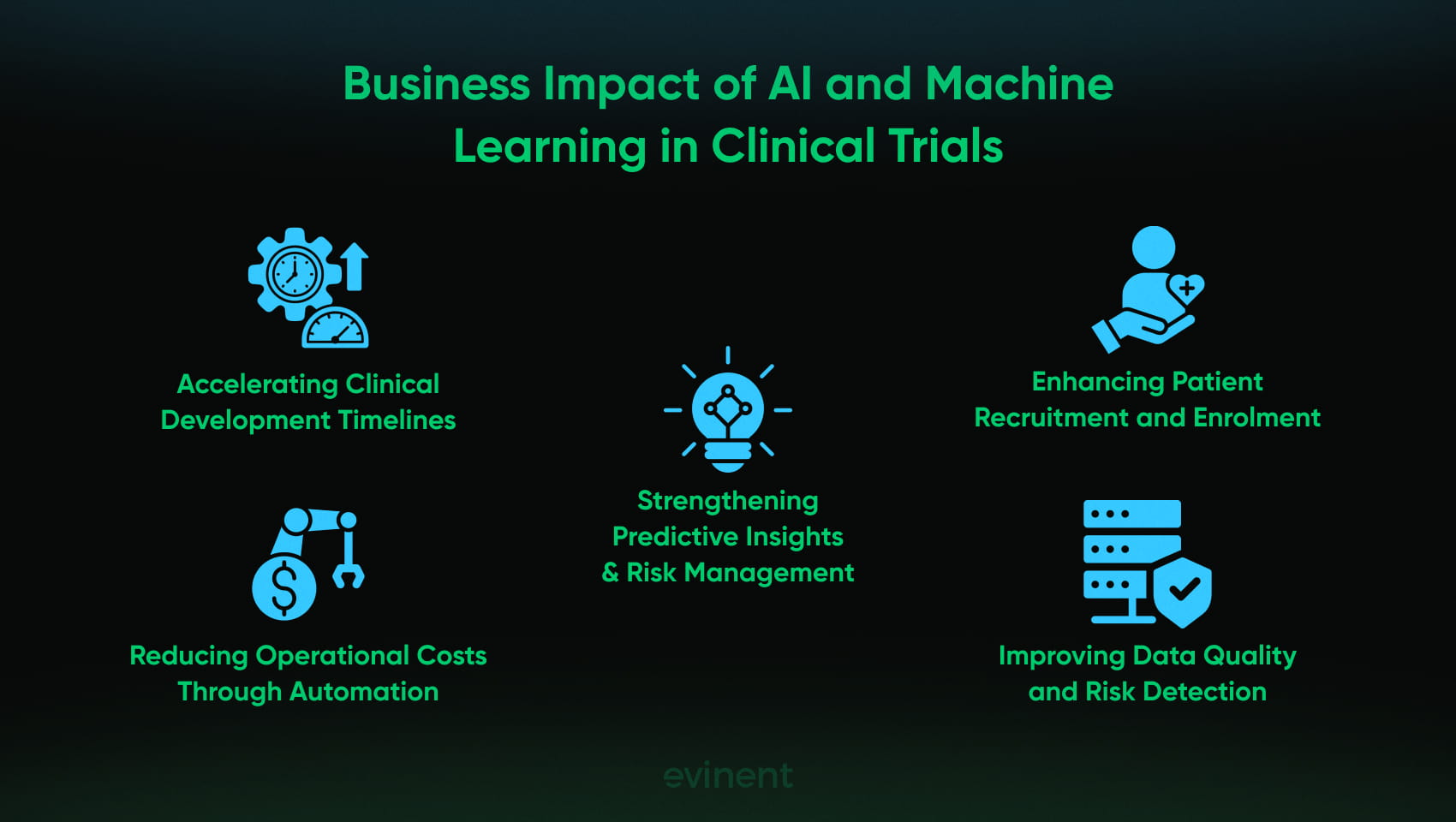
AI and machine learning make obvious and quantifiable contributions in clinical trials that can be translated into business advantages such as saving money, shortening trial duration, better recruitment, and higher data quality. Recent data from the industry is bringing to light these benefits through figures that demonstrate the impact of AI adoption on both operational performance and achieving strategic goals.
1. Faster Timelines and Development Speed
AI and machine learning for clinical trials can significantly accelerate trial timelines by automating complex, repetitive tasks and optimizing operational decisions. According to an industry review, AI integration has been shown to compress clinical development timelines by approximately 30–50%, which helps bring treatments to market faster and improves competitive positioning. (PubMed>PubMed, 2025)
2. Improved Patient Recruitment and Enrollment
AI-powered recruitment tools help find eligible participants more accurately as they can analyze large datasets better than human researchers. According to a few research papers, patient enrollment using artificial intelligence-based recruitment solutions can be increased by as much as 65%, thus trial initiation becomes faster, and postponements are minimized. (PubMed, 2025)
3. Lower Operational Costs and Process Overhead
By digitizing the drafting, tracking, and administrative tasks of the document, Generative AI and automation could reduce the costs of running the business processes by as much as 50%. The freed-up resources can then be directed towards more valuable activities. (McKinsey&Company, 2025)
4. Higher Data Quality and Risk Detection
AI-based analytics result in better data quality and also make it possible to detect anomalies instantly, therefore, reducing manual errors and contributing to better monitoring. The application of risk-based approaches that heighten trust in trial results is, hence, facilitated.
5. Better Predictive Insights and Risk Management
Predictive models powered by Artificial Intelligence allow trial teams to identify risks in advance, thus helping them to predict potential issues before they get out of control. For instance, sophisticated algorithms have reached 85% accuracy in predicting clinical trial results, thus greatly facilitating planning and decision-making. (PubMed, 2025)
It is a fact that the business impact of AI and machine learning clinical trials is no longer just theory. It is becoming very clear through measurable operational and financial results. Shorter timelines, improved recruitment, cost savings, higher-quality data, and enhanced risk management all contribute to a competitive advantage for sponsors and CROs.
AI, if implemented under controlled conditions and with a genuine understanding, can become more than just a technology update. It can become a strategic lever that enhances trial performance, speeds up innovation, and, most importantly, increases the sustainability of the business over the long term.
Challenges in Clinical Data Management
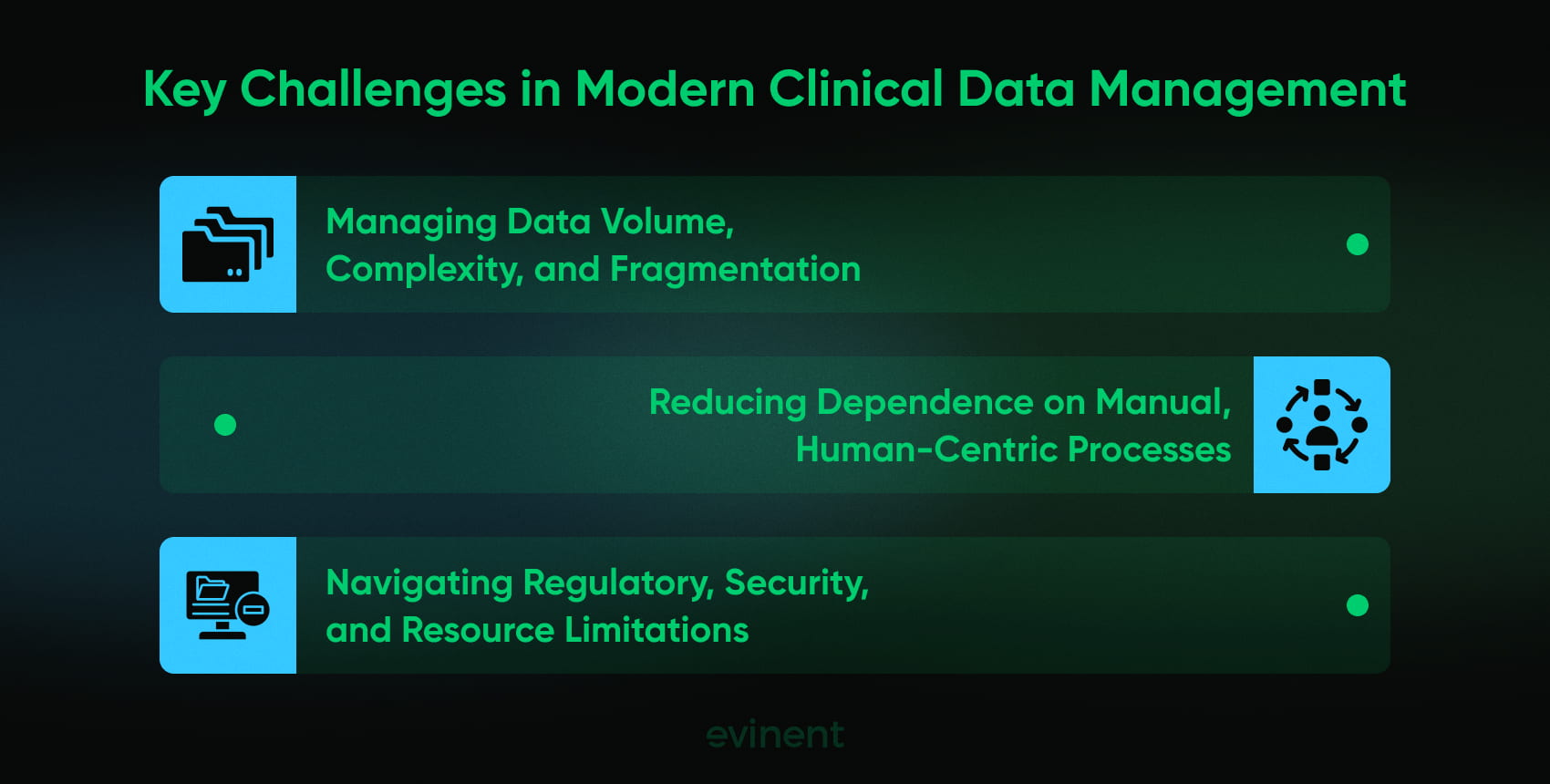
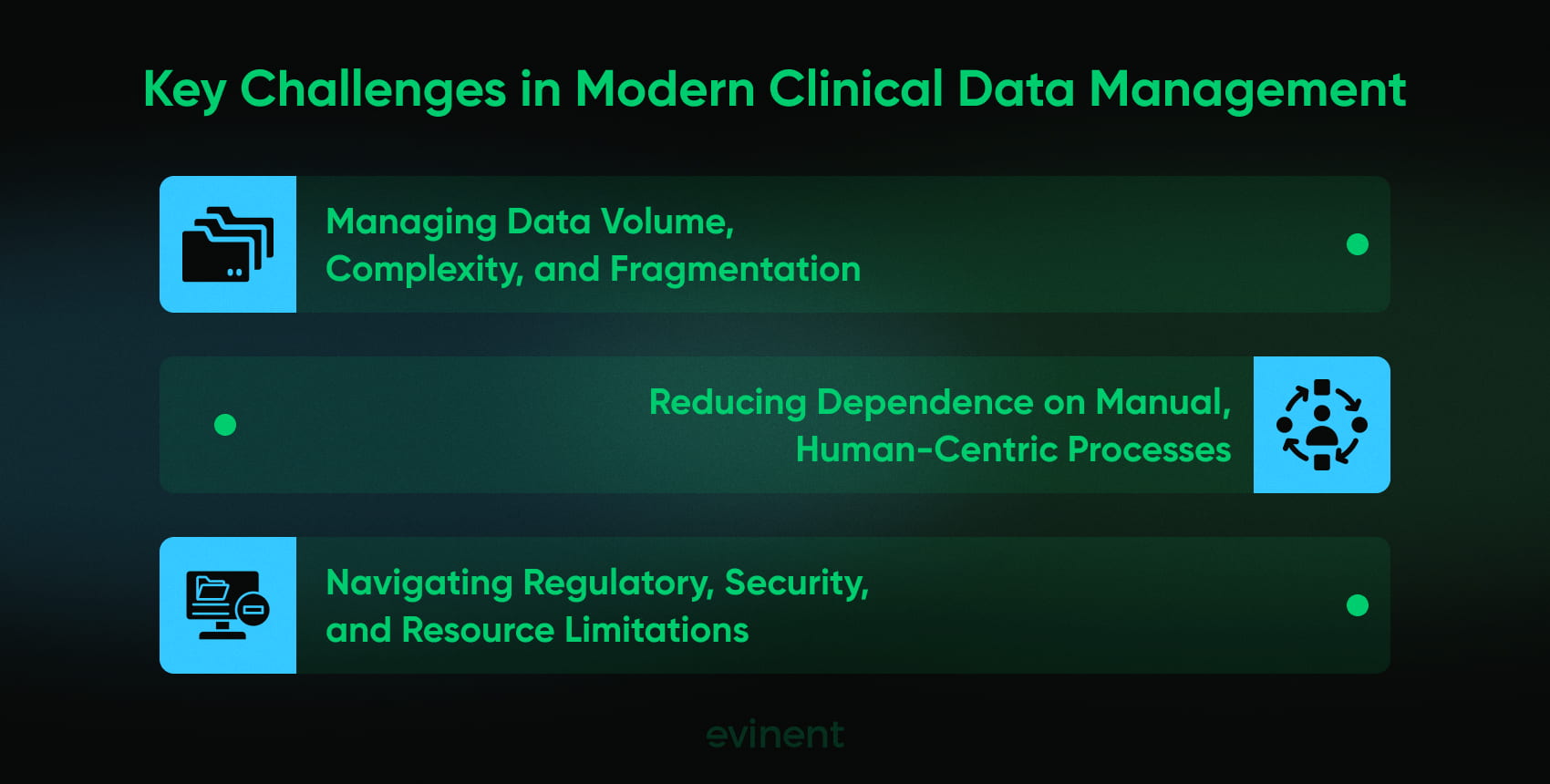
Clinical data management is increasingly challenged due to the greater complexity of trials, a rapid increase in data sources, and a continuous rise in regulatory expectations. It really is a tough balancing act for organizations that have to speed up the processes, remain accurate, and comply with the rules while being limited in resources and infrastructure. The problems described here are far-reaching and concern the effectiveness of the operations and, on top of that, the data quality, the preparedness for the audits, and the success of the overall trial.
Data Volume, Complexity, and Fragmentation
Modern clinical trials generate large volumes of structured and unstructured data from multiple systems, including EDC, EHR, laboratories, and external platforms. This leads to data fragmentation, limited accessibility, and difficulties in ensuring data completeness and consistency. Without strong data governance and integration strategies, teams struggle to maintain high data quality across the entire trial lifecycle.
Human Dependency and Manual Processes
Manual data entry and review are still the norm in a lot of businesses, which leads to higher risks of errors, s, and inconsistencies. Dependence on old school data management tools also keeps scaling down and makes validation and reconciliation processes slower. As trials get more complicated, it gets very tough for human-centric workflows to be maintained without automation and smart assistance.
Regulatory, Security, and Resource Constraints
Ensuring regulatory compliance while protecting sensitive patient information is an ongoing challenge. Clinical teams must meet strict audit requirements, manage data privacy risks, and maintain security standards — often with constrained budgets and limited skilled resources. These pressures make it difficult to modernize systems while keeping operations compliant and cost-effective.
As patient data grows, clinical data management challenges have intensified. Additionally, workflows continue to be partially manual, and regulatory demands are getting higher. However, tackling these problems needs not only better tools but also a strategic shift towards automation, integration, and stronger data governance for maintaining sustainable and compliant clinical operations.
Improving Collaboration and Workflow in Clinical Data Management
This part discusses the ways AI-driven applications and integrated data platforms help parties involved work together better, break down the barriers between data sets, and revamp the clinical data management operations so that trial work is carried out at a quicker, clearer, and more dependable level. With the increasing distribution and data intensiveness of clinical investigations, good coordination and efficient processes are not just two nice things; they are essential for the success of the trial.
Eliminating Data Silos Across the Clinical Ecosystem
AI-driven platforms combine data coming from EDC systems, labs, imaging devices, and external data sources into one single environment. This not only minimizes fragmentation but also guarantees consistent data access to sponsors, CROs, and sites. When teams work based on the same authorized datasets, it is less likely that they will be ed by reconciliation and duplicated work; moreover, it is easier to assign responsibility across different functions.
Strengthening Cross-Functional Collaboration
Unified workspaces leveraging AI-driven insights enable clinical operations, data management, biostatistics, and regulatory teams to collaborate as if they were in the same room. Rather than sequential handoffs, stakeholders can solve problems together, thereby speeding up decision-making and minimizing the risk of miscommunication that frequently s complex trials.
Accelerating Data Review and Issue Resolution
Advanced anomaly detection and predictive analytics have made it possible to turn data review into a proactive rather than reactive process. AI points out possible risks, inconsistencies, and patterns at a very early stage, which helps teams to prioritize their actions and resolve issues before they escalate to protocol deviations or inspection findings.
Enabling Scalable Global Collaboration
Large language models and advanced NLP tools support multilingual documentation, automated summaries, and consistent knowledge sharing across regions. This makes global trials easier to manage by reducing variability in communication, improving clinical trials with machine learning for better transparency, and ensuring that best practices are applied consistently across geographies.
Redesigning Processes with AI-Driven Workflow Strategies
AI makes it possible for enterprises to evolve their old, manual workflows into smart, data-driven process frameworks. Staff can be freed from mundane coordination tasks through automation and operational performance can be constantly analyzed team can also decide who to assign the tasks, shorten the production time and develop workflows that can handle more complicated trials over time.
AI-driven collaboration transforms clinical data management into a tightly synchronized, end-to-end, workflow-based process from a set of disconnected activities. Clinical organizations, by tearing down the data silos, getting on the same page with the stakeholders, and speeding up the resolution of the issues, have achieved higher transparency, quicker implementation, and stronger clinical operations And all these factors in a perfect circle are, ultimately, increasing the quality of the trials and the adherence to the delivery timelines.
Ensuring Data Protection and Regulatory Compliance in AI-Enabled Clinical Data Management
This part addresses the issue of how the medical sector can shield vulnerable patient data, accomplish legal mandates, and uphold moral standards through the use of artificial intelligence in clinical data management. With the rapid growth of AI usage, sticking to rules is not just about the old data governance anymore ー it also involves the disclosure of algorithms, the responsibility of vendors, and the continuation of patient trust.
Protecting Sensitive Patient Information
AI systems generally handle massive amounts of very sensitive clinical data, so strong data security is probably a must. Using strong encryption, access control, and having a clear data handling policy from AI vendors will be critical in preventing breaches and ensuring that data privacy regulation requirements are met.
Navigating GDPR, HIPAA, and Global Privacy Frameworks
More and more clinical trials are going on in multiple jurisdictions; thus, they need to be aligned with GDPR, HIPAA, and other regional data protection laws. AI implementation should be based on privacy by design principles so that it ensures lawful processing, cross-border data transfers, and audit readiness.
Managing Algorithmic Bias and Ethical Risks
AI models can end up amplifying bias inadvertently if they are exposed to partial or skewed datasets during their training. Implementing measures to stop algorithmic bias is crucial for upholding the compliance of ethical frameworks, ensuring the safeguarding of patients' interests, and maintaining that AI-assisted decisions are both fair, explainable, and clinically appropriate.
Ensuring Transparency in AI Decision-Making
Regulators and stakeholders expect greater visibility into how AI systems generate insights and recommendations. Transparent models, documented validation processes, and explainable outputs help organizations demonstrate compliance and build confidence among regulators and clinical teams.
Maintaining Audit Readiness and Continuous Compliance
Regular audits, ongoing monitoring, and effective data governance frameworks are the means through which AI-driven processes can be ensured to be compliant at each stage of the clinical trial lifecycle. Such ways also include recording model updates, following data lineage, and keeping the chain of accountability for regulatory oversight transparent.
Effective use of AI in clinical data management depends as much on trust and compliance as on technology itself. By strengthening data protection, ensuring regulatory alignment, and promoting transparency in AI decision-making, organizations can adopt innovation responsibly while safeguarding patients, meeting legal obligations, and maintaining long-term credibility with regulators and partners.
Enhancing Efficiency and Accuracy in Clinical Data Management
This part demonstrates the impact of AI on operational efficiency and data accuracy in clinical trials. AI facilitates clinical teams to reduce errors, speed up processes, and maintain data quality at a high level throughout the trial lifecycle by automating repetitive tasks, streamlining workflows, and providing risk-based monitoring support.
Key Areas of Efficiency and Accuracy Improvements
Area | AI Application | Benefits |
Data Cleaning and Validation | AI tools automatically detect inconsistencies, missing values, and outliers | Reduces manual effort, improves data quality, and accelerates reconciliation |
Medical Coding | AI-assisted coding maps clinical data to standardized terminologies | Minimizes human error, ensures consistency, and supports faster regulatory submission |
Audit Trail Review | Automated tracking and review of data changes | Enhances transparency, reduces compliance risks, and simplifies audit preparation |
Workflow Automation | EHR integration, feature extraction, and automated patient monitoring | Streamlines routine tasks, shortens timelines, and frees clinical staff for higher-value activities |
Risk-Based Monitoring | Predictive analytics and reinforcement learning algorithms | Enables proactive identification of high-risk sites or data anomalies, improving safety and trial oversight |
Using AI to clean data, code, review audits, and automate workflow, clinical teams can get more efficient and accurate in the trial lifecycle. The enhancements made can bring about a decrease in errors and operational burden, a facilitation of faster decision-making, stronger regulatory compliance, and more trustworthy trial outcomes.
Future Trends and Developments with AI and Machine Learning
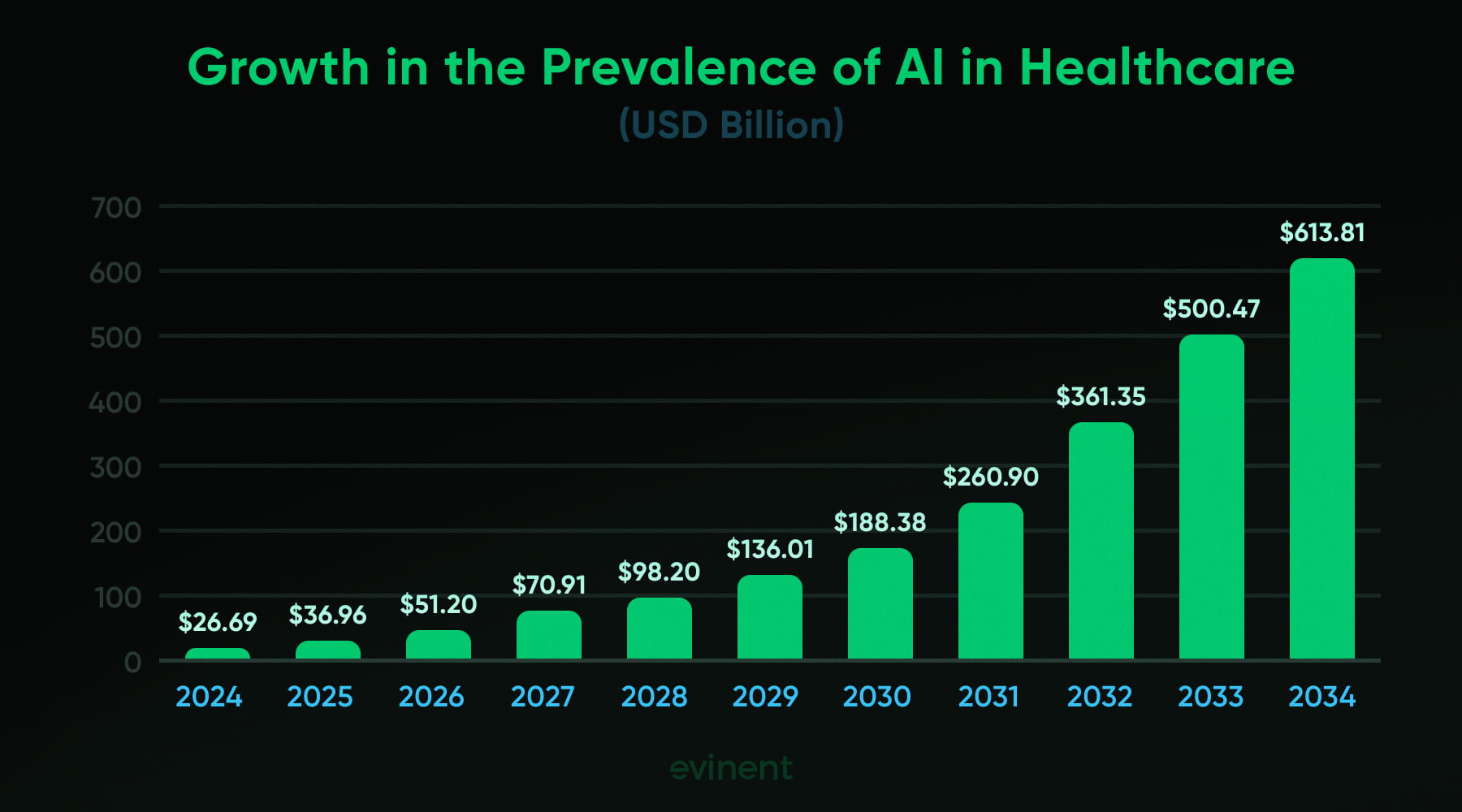
AI in healthcare was valued at USD 36.96 billion in 2025 and is projected to reach USD 613.81 billion by 2034 (Precedence Research). The part above explains anticipated changes and innovative trends in AI and machine learning, which will impact the future of clinical data management. Since trials are becoming more adaptive, patient-centric, and data-intensive, AI tools are being developed to facilitate precision medicine, perform data analysis in real-time, conduct remote monitoring, and provide explanations for decision-making.
Trend: AI-Enabled Precision and Personalization
Modern artificial intelligence techniques are extensively applied to dissect and understand highly complex sets of data, encapsulating information such as genomics, biomarkers, and patient profiles. This is mainly done to aid precision medicine approaches that are essentially capable of tailoring the treatments to the specific characteristics of the individual, thereby enhancing the prediction of the results and the effectiveness of the therapies used.
Trend: Real‑Time and Remote Data Collection
Wearables and other connected devices are on the rise, continuously recording physiological data during clinical trials and the release of the patient to the market. AI analyzes real-world data to reveal patterns, detect non-compliance situations, and unveil the earliest safety signals, thus enabling further expansion of decentralized clinical trial features.
Trend: Adaptive Protocols and Predictive Modelling
Predictive analytics and adaptive clinical simulation tools help optimize protocol design, forecast trial outcomes, and support dynamic adjustments based on incoming data. These approaches reduce uncertainty and improve operational planning. (arXiv, 2024)
Trend: Explainable and Trustworthy AI
As AI plays a larger role in clinical decision support, there is increasing emphasis on explainable models, transparency in algorithmic logic, and frameworks to ensure trust, safety, and regulatory acceptance of AI‑generated insights. (arXiv, 2024)
Trend: Market Growth in AI Solutions for Clinical Operations
The market for AI-based trial solutions, including patient matching and data analytics, is rapidly growing. For instance, patient matching solutions are expected to increase from USD 1.2 billion in 2024 to USD 4.8 billion by 2034 (CAGR ~14.8%), driven by the need for efficiency and accuracy in trial execution. (Emergen Research, 2025)
AI and machine learning will probably transform clinical data management significantly by introducing a higher degree of adaptiveness, personalization, and a data-centric approach in trials. Presently, the signs are indicating that continuous patient monitoring, prediction-based trials, and interpretable AI will be the basis of the next-generation clinical research infrastructure — thus facilitating quicker insights, better data accuracy, and more patient-friendly results.
The Role of Human Expertise in AI-Driven Clinical Data Management
The effective implementation of AI in clinical data management relies not only on technology but also on people. This section looks at how companies can get their staff ready for AI-based changes by creating trust, enhancing capabilities, combining human knowledge with machine processes, and carrying out change management in a systematic and long-lasting manner.
Building AI Awareness and Reducing Resistance
Many clinical teams are cautious about AI adoption due to concerns about job security, accountability, and loss of control. Structured communication, transparency about AI goals, and early involvement of key stakeholders help reduce resistance and position AI as a support tool rather than a replacement.
Developing AI Literacy and Training Strategies
AI learning programs and targeted training strategies are key components to assist clinical data managers in grasping how AI systems operate, what their limitations are, and how to evaluate AI-generated outputs. Boosting AI literacy allows teams to utilize technology with confidence and accountability.
Integrating Human Expertise into AI Workflows
Human-in-the-loop models ensure that critical decisions—such as data adjudication and protocol deviations—remain under expert oversight. By embedding clinical data professionals into AI-supported workflows, organizations balance automation with accountability and clinical judgment.
Creating Champions and Change Leaders
Successful change management depends largely on internal champions who promote AI adoption, share the best practices, and help their peers. These leaders serve as a bridge between technology teams, operations, and regulators, facilitating the alignment of innovation with practical clinical processes.
Building Knowledge-Based and Future-Ready Teams
AI makes possible new roles in clinical data science that are supported by knowledge graphs as well as knowledge-based architectures that maintain institutional knowledge. This transition facilitates organizations to change their personnel from task-oriented roles to insight-driven, strategic data management functions.
Moving to AI in clinical data management is eventually a shift in the human element. When they invest in skills, trust, and structured change management, the organizations make sure that technology elevates clinical expertise and doesn't disrupt it, thus facilitating sustainable innovation and long-term success.
AI-Enabled Integration and Interoperability in Clinical Data Management
This section delves into the role of AI in unleashing smooth integration between multiple data sources and systems in clinical trials. Enhancing interoperability puts organizations on the path to quicker data flows, more effective partnerships between the stakeholders, and dependable, audit-ready insights.
1. Unified Data Access Across Systems
AI integrates structured and unstructured data from EDC, labs, EHRs, and external platforms, providing a consistent and accessible data layer for all stakeholders. This reduces manual reconciliation and ensures teams operate on validated, up-to-date information.
2. Automated Connectivity and Standardization
Using APIs, FHIR standards, and automated processes, AI reduces the need for manual data integration. New data sources can be connected quickly, improving operational efficiency and minimizing IT maintenance burdens.
3. Real-Time Data Processing
AI makes it possible for real-time inference and monitoring, thereby allowing the instant detection of anomalies, risks, or safety signals. As such, this helps in making quicker decisions and managing risks proactively as opposed to the traditional batch processing methods.
4. Semantic Interoperability Across Formats
Advanced NLP tools break down the various medical terminologies and data structures to their common meanings and help different systems “speak the same language.” This not only increases the accuracy of the reports but also makes multi-site, multi-system clinical trials easy to execute.
5. Secure and Federated Collaboration
Federated learning enables AI models to learn from distributed datasets without moving sensitive patient information. This approach enhances privacy, strengthens compliance, and allows collaboration across institutions without centralizing all data.
AI-powered integration and interoperability transform the handling of clinical data by linking disparate systems, automating processes, and enabling instant insights. Thus, it minimizes disruptions in operations, increases the accuracy of data, and offers a scalable platform for contemporary clinical trials across multiple locations.
AI‑Driven Predictive Modeling in Clinical Trials
In this section, we discuss how artificial intelligence (AI) and machine learning (ML) help support predictive analytics in clinical trials. Predictive models can not only forecast the results but also help trial designers define the risks, optimize the design of the trial, and facilitate data-driven decision-making throughout the clinical trial operations.
1. Predicting Clinical Outcomes
AI-driven models use past and current data to predict trial endpoints, treatment responses, and patient outcomes. Based on the prediction, sponsors can make a proactive decision to change the protocols and use their resources more efficiently.
2. Risk Identification and Mitigation
Machine learning algorithms detect anomalies, adverse events, and safety signals early. By integrating predictive insights with risk-based monitoring, teams can focus on high-risk sites or participants, improving patient safety and trial reliability.
3. Optimizing Trial Design
With the help of simulation models, adaptive trial designs, and digital twins, it is possible to play out different scenarios ahead of, or during, the trial. AI forecasts can help identify operational limits and the impact of protocols, thereby facilitating the creation of more efficient and flexible study designs.
4. Genomics and Biomarker Analysis
AI models such as deep learning and Alphafold2 drastically speed up the processes of genomic data analysis and biomarker discovery. This helps to develop personalized treatment strategies and precision medicine approaches in the context of clinical trials.
5. Enhancing Decision Support with AI Insights
AI-assisted medical coding, large language models, and predictive coding provide actionable insights for trial managers, biostatisticians, and regulators. These tools improve accuracy, reduce manual effort, and support informed decision-making.
AI-driven predictive modeling transforms clinical trials by enabling proactive risk management, data-driven protocol optimization, and personalized patient insights. By integrating these predictive tools, organizations can improve trial efficiency, reduce costs, and generate more reliable and actionable outcomes.
How Evinent Supports AI Implementation in Clinical Data Management
Evinent has stood alongside sponsors and CROs as a reliable technology partner for a long time. Together, we have carried out AI-driven projects aimed at enhancing efficiency, data quality, and regulatory compliance in clinical trials. We center our efforts on embedding AI tools within the workflows, bringing together scattered data sources, and making it possible for actionable insights to be obtained with the least amount of manual effort.
Why Organizations Choose Evinent for AI Integration
15+ years of healthcare and enterprise software experience
Proven delivery of secure, scalable AI-enabled platforms in regulated environments
Expertise in integrating AI with EDC, EHR, and other clinical systems
Consistent execution on complex, multi-phase clinical programs
Evinent AI Capabilities
Integration of AI-powered predictive models and analytics
Automated workflows and data validation
Secure access controls and compliance tracking
Custom dashboards, s, and reporting
Scalable architectures for multi-study, multi-site environments
We don’t sell off-the-shelf solutions. Evinent builds custom AI-enabled platforms tailored to your clinical data management needs, ensuring operational efficiency, regulatory compliance, and reliable insights for clinical teams and sponsors.
Key Takeaways
Defining AI in Clinical Data Management: AI is the core technology that drives automation, enhances data quality, and provides up-to-the-minute insights in clinical trials.
Ways of Using AI in Clinical Data Management: AI facilitates data cleaning, validation, and predictive analytics; it includes NLP, adaptive trial designs, patient recruitment, and automated reporting.
Main Issues in Clinical Data Management: The primary challenges are data volume, complexity, human error, integration problems, and meeting regulatory requirements.
Collaboration and Workflow Transformation: AI-powered platforms open new possibilities for collaboration among stakeholders, optimize workflows, and eliminate data silos.
Data Privacy and Regulatory Considerations: To comply with GDPR/HIPAA, data security, ethical standards, and audit readiness, implementing AI requires consideration of these aspects.
Efficiency and Accuracy Improvements: AI is a game-changer for medical coding, data reconciliation, audit trail review, workflow automation, and predictive monitoring.
Future Trends and Developments: The spotlight is on patient-centric trials, precision medicine, adaptive protocols, real-time monitoring, and explainable AI.
The Role of Human Expertise and Change Management: Training, AI literacy, human-in-the-loop oversight, and proactive change management are keys to successful AI adoption.
Integration and Interoperability: AI is a major enabler of smooth data flow, system integration, NLP standardization, real-time inference, and federated learning.
Predictive Analytics and Modeling: Using AI models to predict outcomes, identify risks, optimize trial design, and help with genomics and biomarker analysis.
Advantages of AI and Machine Learning in Clinical Trials: These technologies lead to higher operational efficiency, better-quality data, faster decision-making, more accurate patient matching, and cost savings.
How Evinent Can Help: We offer customized AI deployment, workflow automation, system interoperability, and compliance-ready clinical data management platforms.
Share